14. Table of Contents Previous Next
8/25/26
“Monroe, Joe, and Joe - Hard Times and Hunger Pangs”
The stars of bluegrass music or “Blue Grass,” as some prefer (yes, there are actually brutal arguments over the number of words identifying the genre), have always made themselves accessible to fans. So, as a young’un learning to play, I got to meet Bill Monroe and my other first-generation bluegrass heroes. Later, I’ll tell you about a casual conversation between Monroe and me. I don’t want to give you the impression that we knew each other. I think he did recognize me as a fan who attended many of his shows, which may have moved him to open to me a little.
The story below was related to me by fiddler Joe Meadows (1934-2003). Joe worked with the Stanley Brothers, Jim & Jesse, and was one of Monroe’s Blue Grass Boys for about a year, from 1956 to 1957. For a swell biography of Joe, see Jack Leiderman’s liner notes for the 1998 Patuxent album “Mountains, Rivers, and Meadows.”
Joe moved to the Washington DC area in 1983 to work in Senator Robert Byrd’s office. While in the area, he became a part of DC’s bluegrass scene, playing in several area bands and recording a couple of fiddle albums. That’s how I became Joe’s bandmate and record producer. Joe liked to tell stories of his d
ays on the road as a musician, and coincidentally, I liked to listen to those anecdotes.
------------------------------
Joe told me that while he was a Blue Grass Boy, Monroe was going through some hard times. Sometimes on the road, the Blue Grass boys consisted of just Bill, Joe Meadows, and Joe Stuart. Stuart could play any instrument, so when they arrived at a town where they were about to perform, they would try to find a bass player and, with any luck, a decent guitarist or banjo player to fill out the band. I suppose that if their efforts failed, they would still have a mighty fine trio.
On one occasion, Bill, Joe, and Joe were in Bill’s big car on a long trip between shows. Bill seldom drove, so it was up to the Joes to handle the wheel. They were tired – so tired that neither Joe could stay awake behind the wheel for longer that fifteen minutes, after which they had to stop and switch drivers. On one of those grueling excursions, they snapped out of it when Bill said, “There’s a place right up the road where we can stop and eat and I’ll make a deal with you boys. Whichever one of us eats the least has to pay the bill of all three of us.” Well, Joe and Joe were not only tired but hungry, so they readily agreed to Bill’s proposition. Bill pointed and told whichever Joe was driving to turn here, then turn there, until the long-awaited restaurant came into view. Joe Meadows realized that something was up when he saw a sign that read ‘Raw Bar’ on the front of the restaurant. His fears were realized when they went inside and found that the only food item on the menu was raw oysters.
Monroe ordered a dozen and slurped them down within a few minutes. Meadows told me that he gagged on the first one but found that if he swallowed each critter with a mouthful of water, he could get it down. He said, “I just made sure that I was one oyster ahead of Joe Stuart.” In the end, Joe Stuart had to pay the tab.
------------------------------
About twenty-five years after the aforementioned oyster incident, I encountered Monroe at his record table, sans customers. I hazarded asking him about the Joes and oysters. He laughed and said “Yeah, I really got them boys, didn’t I?” He asked how Joe Meadows was doing and after some small talk, he assured me that “Joe’s a mighty powerful fiddler.”
Photos:
1. Monroe’s 1942 Buick.
2. Joe Stuart
3. Joe Meadows in the Patuxent Studio, 1997
4. Joe with the Patuxent Partners, 1986
Tom Mindte
August 2026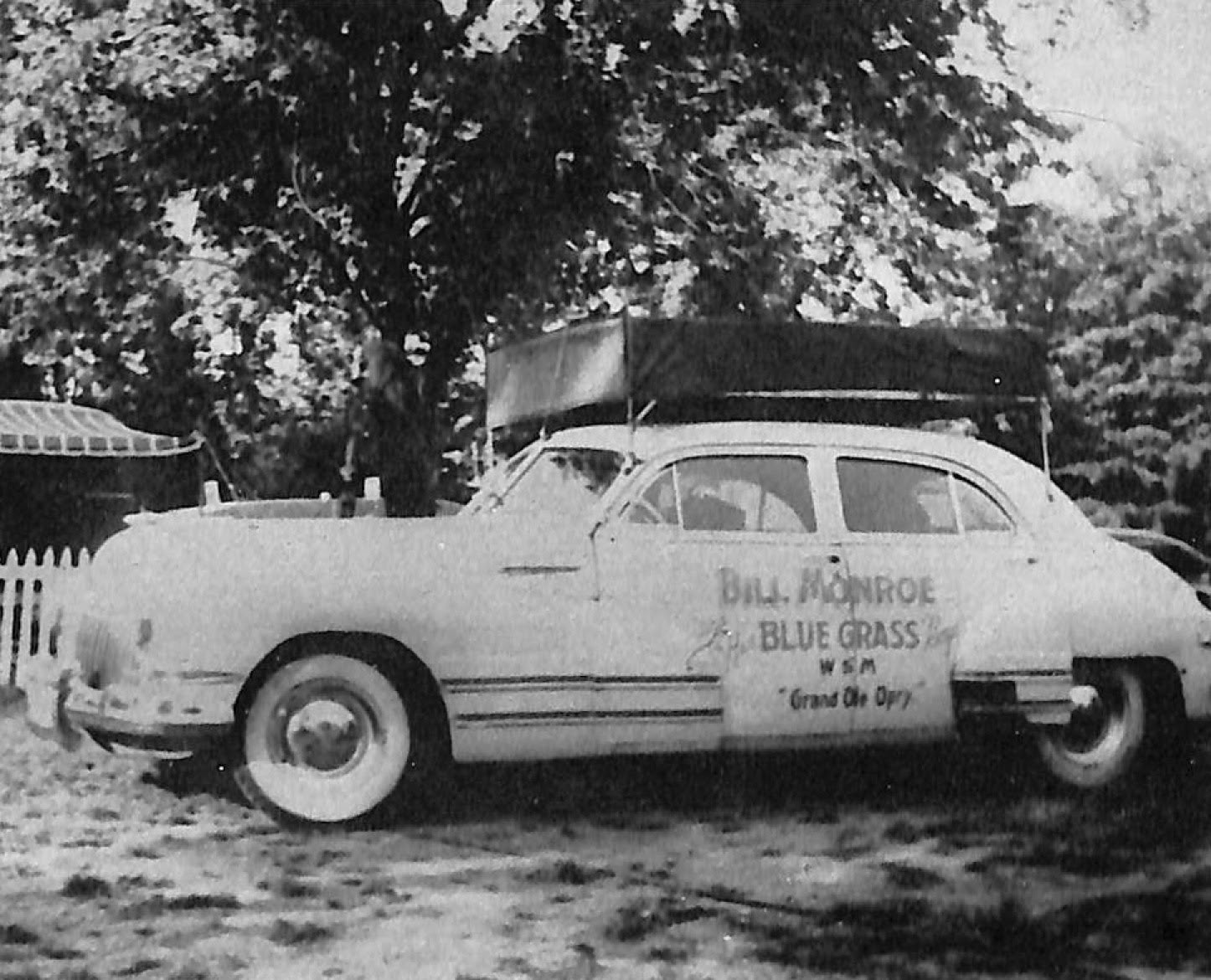
Monroe’s 1942 Buick.
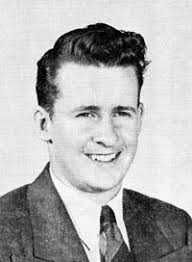
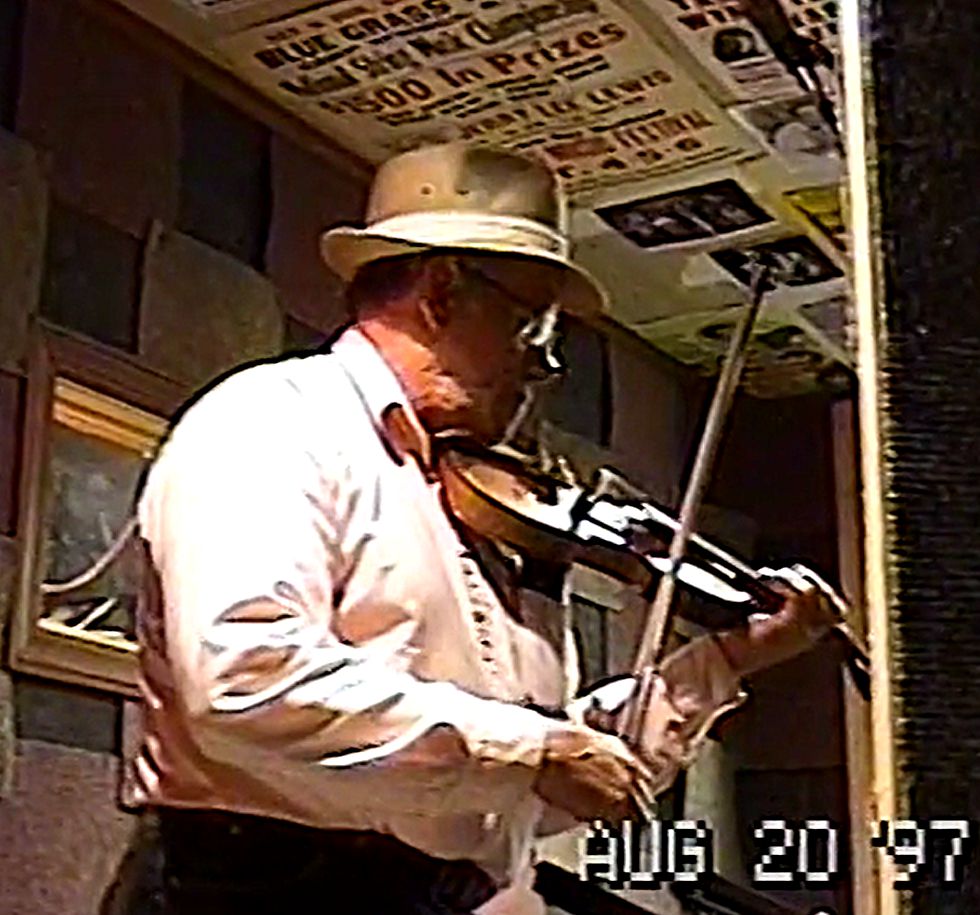
Joe Stuart Joe Meadows in the Patuxent Studio, 1997

Joe with the Patuxent Partners, 1986